Author: Ashok Kumar, Department of Telecommunications, Ministry of Communications, India
Introduction
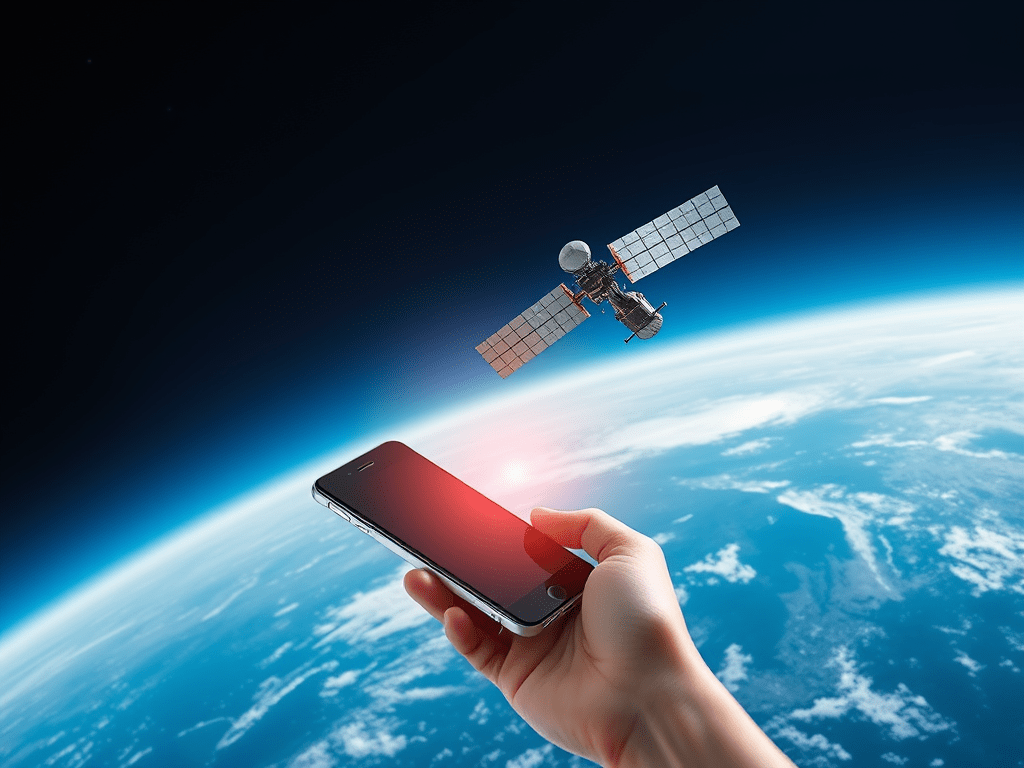
Direct to Cell (DTC) technology is poised to transform global connectivity by enabling direct communication between satellites and mobile devices. This groundbreaking technology help in extending coverage to remote and underserved areas. With companies like Starlink actively testing and deploying DTC solutions, the future of seamless, global connectivity is within reach. This document explores the technical architecture, benefits, challenges, and future prospects of DTC technology, with a focus on its integration into 5G networks.
What is Direct to Cell (DTC) Technology?
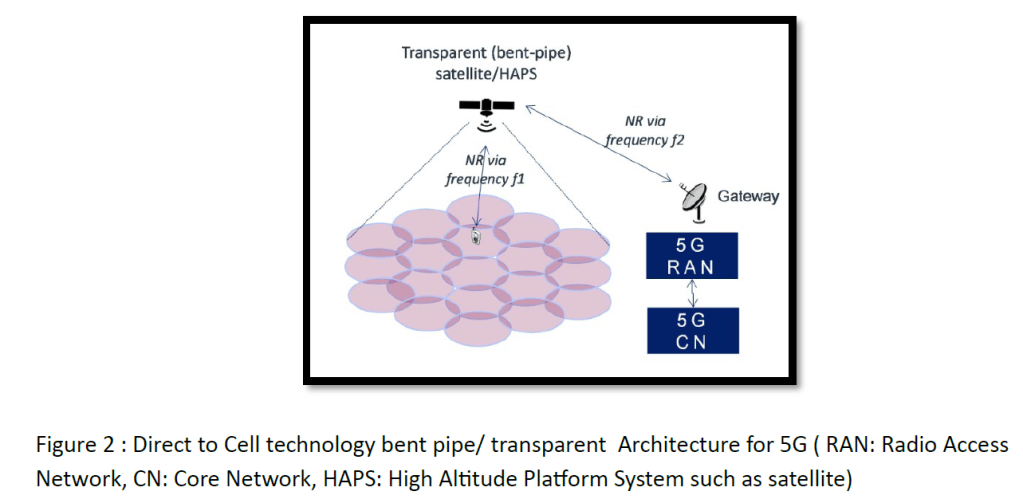
DTC technology allows 4G and 5G base stations (eNB/gNB) to be installed on satellite payloads, radiating signals directly to mobile devices on Earth. This means that standard mobile devices can theoretically access 4G/5G services such as messaging, voice calls, and basic data without the need for ground-based infrastructure. DTC technology is particularly promising for extending connectivity to remote areas, disaster zones, and regions with limited terrestrial infrastructure.
There are two primary types of DTC deployment:
- Non-Transparent Satellite Architecture: In this model, the satellite has complete Base Transceiver Station (BTS) functionality onboard. The satellite processes the signal and communicates directly with mobile devices.

2. Transparent (Bent Pipe) Architecture: Here, the satellite acts as a relay, forwarding signals between ground stations and mobile devices without processing them. This architecture is simpler and more cost-effective but relies on ground-based processing.
Satellite Used for DTC Technology
Generally Low Orbit Satellites (LEO) will be used for DTC technology as it can offer low latency and better data rates for users. LEO satellites are positioned relatively close to Earth, typically between 160 and 1,600 kilometers above the surface.
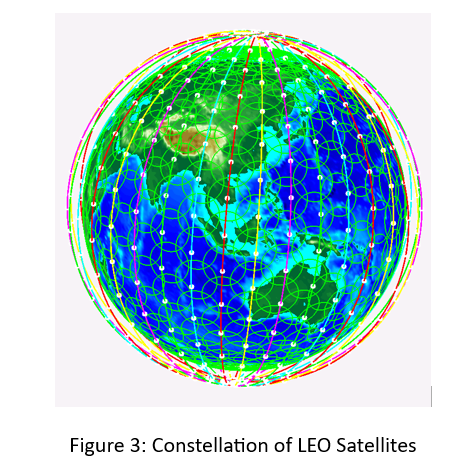
This proximity allows them to provide high-speed, low-latency communication, making them ideal for applications like satellite internet. LEO satellites orbit the Earth in about 90 minutes, which means they can cover the entire planet quickly but require a network of satellites to ensure continuous coverage. Their lower altitude also means they are more accessible for maintenance and upgrades, though they face challenges like atmospheric drag, which can shorten their operational lifespan.
Technical Architecture
1. Transparent/Bent Pipe Architecture
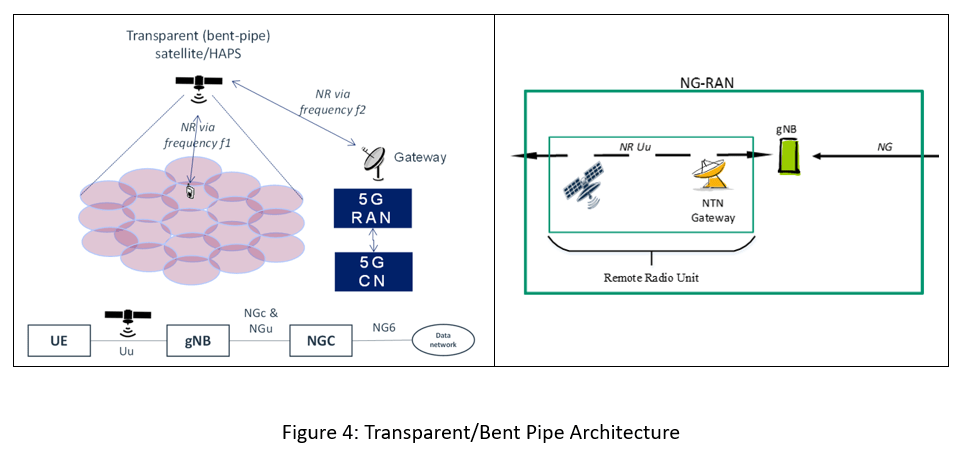
In this architecture, the satellite acts as a relay, simply forwarding the signal from the ground station to the end-user without any modification. The signal path resembles a “bent pipe,” where the signal is bent at the satellite and sent back down. This approach is simpler and often more cost-effective, with lower latency since the signal is not processed onboard.
- Key Components:
- Satellite Gateway: Acts as the Remote Radio Unit (RRU) of the Radio Access Network (RAN).
- gNB (Next-Generation Node B): Handles the 5G QoS (Quality of Service) flow and protocols.
- Advantages:
2. Non-Transparent/Regenerative Architecture
In this model, the satellite processes the signal before forwarding it to the end-user. The satellite regenerates the signal, improving quality and reliability. This architecture is more complex but offers better performance in terms of signal quality and network resilience.

- Key Components:
- Satellite Payload: Implements both the Baseband Unit (BBU) and Remote Radio Unit (RRU) functionalities.
- Satellite Gateway: Connects to the satellite via the Satellite Radio Interface (SRI).
- Advantages:
- Improved signal quality and reliability.
- Enhanced network resilience and performance.
gNB Split Architecture (CU/DU)
5G networks support a split architecture where the gNB is divided into a Centralized Unit (CU) and a Distributed Unit (DU).
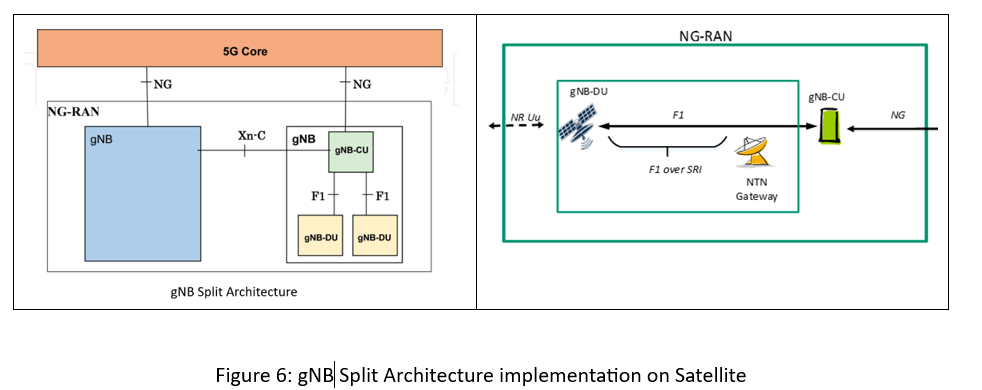
In DTC technology, the DU functions can be handled by the satellite payload, while the CU functions are managed on the ground. This architecture allows for greater flexibility and scalability in network design.
Inter-Satellite Link (ISL)
An Inter-Satellite Link (ISL) enables direct communication between satellites, reducing latency and increasing network resilience.
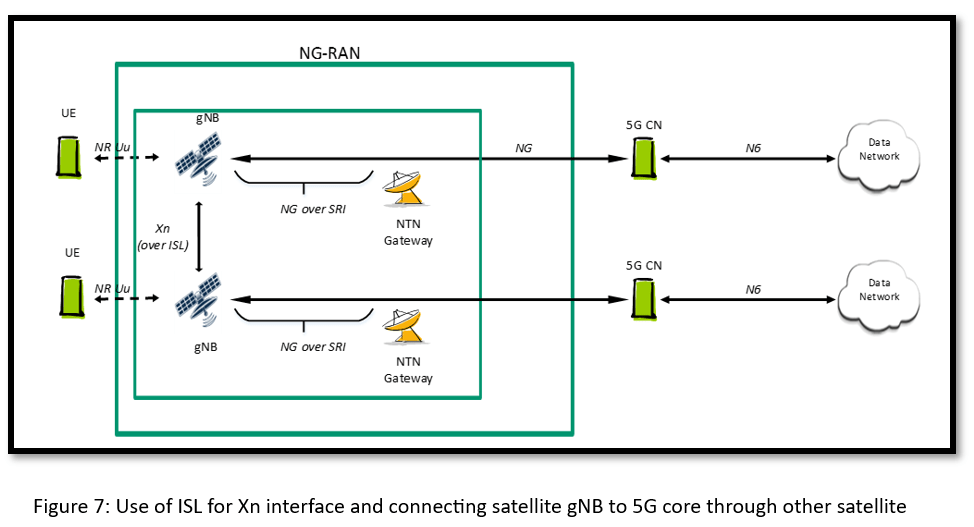
ISLs are particularly useful in DTC technology for connecting satellite gNBs to the 5G core network via other satellites, avoiding the need for ground-based routing.
Satellite Types and Spectrum
Low Earth Orbit (LEO) Satellites
LEO satellites are the preferred choice for DTC technology due to their low latency and high data rates. Positioned between 160 and 1,600 kilometers above Earth, LEO satellites orbit the planet in about 90 minutes, providing global coverage with a constellation of satellites.
- Frequency Bands:
- Uplink: 1610-1626.5 MHz (L-band)
- Downlink: 2483.5-2500 MHz (S-band)
These bands have been identified by 3GPP in its Release 17 and 18 for satellite integration into 5G networks.

Device Support and Relay Nodes
Device Compatibility
Currently, most commercial mobile devices do not natively support the L-band and S-band frequencies used by DTC technology. However, specialized devices such as satellite phones and IoT devices may already support these bands. Future devices are expected to integrate DTC technology natively, and external modems can be used to enable compatibility with existing devices.
Relay Nodes
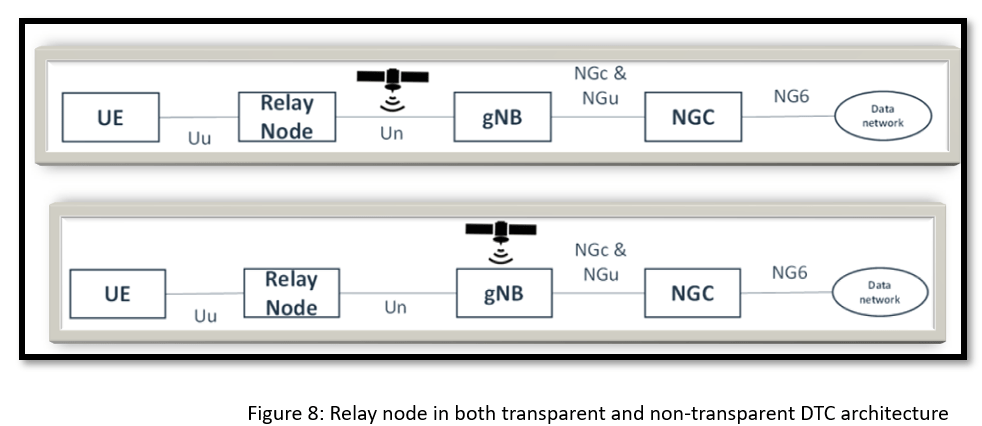
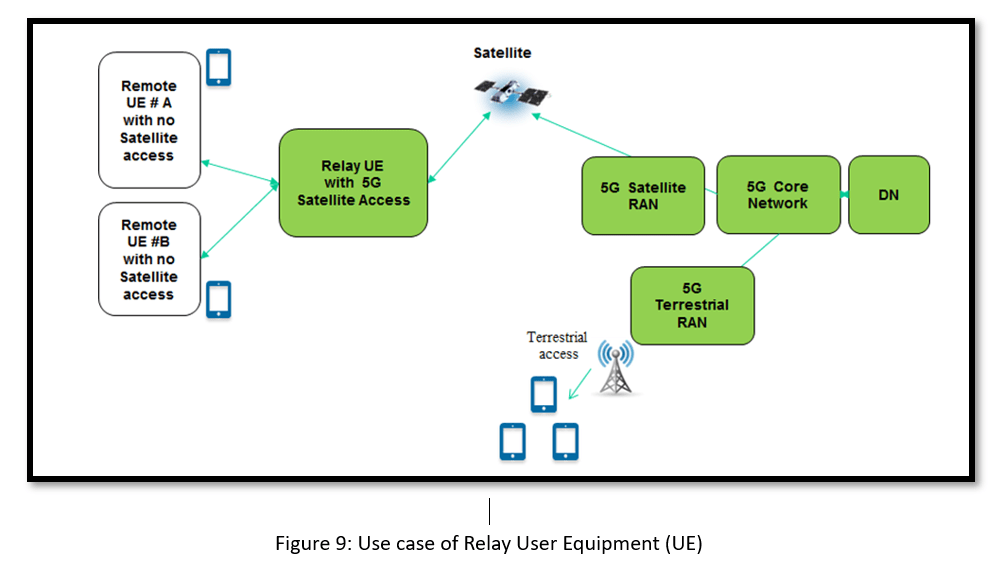
For devices that do not support direct satellite connectivity, Relay User Equipment (UE) can act as intermediaries. Relay nodes extend network coverage and improve connectivity, particularly in areas with limited or no direct coverage from a base station.
Benefits of DTC Technology
- Global Coverage: DTC technology provides connectivity to remote and underserved areas, eliminating the need for traditional cell towers.
- Network Resilience: Direct satellite-to-cell connections ensure continuous service, even in disaster scenarios.
- Seamless Connectivity: DTC enables uninterrupted mobile services while traveling in airplanes, ships, or remote regions.
- IoT Connectivity: DTC supports machine-to-machine communication in underserved and unserved parts of the world.
- Multicast and Broadcast Services: DTC can offer direct-to-device and direct-to-edge services for mobile users.
Starlink’s Direct to Cell (DTC) Technology
Starlink, in collaboration with mobile operators like T-Mobile (USA), Optus (Australia), and Rogers (Canada), is pioneering DTC technology. Starlink’s DTC solution operates in the L-band and S-band frequency ranges, using advanced modulation techniques like QAM and LDPC. The technology is compatible with some existing 4G and 5G devices, though future devices are expected to integrate DTC natively.
- Pricing: While not yet commercially available, the service is expected to cost between $10 to $25 per month as an add-on to existing mobile plans.
Challenges and Limitations
- Device Compatibility: Most existing devices do not support the required L-band and S-band frequencies.
- Cost: Maintaining a constellation of LEO satellites is expensive, which may affect service affordability.
- Limited Data Services: DTC currently supports only SMS, voice, and basic data. High-speed data requires larger external antennas.
- Interference: Potential interference from other satellite systems.
- Regulatory Challenges: Spectrum allocation and regulatory hurdles may slow deployment.
Conclusion and Future Prospects
Direct to Cell (DTC) technology represents a significant leap forward in global connectivity. By enabling direct communication between satellites and mobile devices, DTC has the potential to bridge the digital divide, providing seamless connectivity to even the most remote corners of the world. While challenges remain, advancements in satellite technology, device compatibility, and regulatory frameworks are paving the way for a future where DTC technology becomes a cornerstone of global communication networks.
References
- 3GPP TR 38.811 and TR 38.821
- 3GPP News: Satellite Integration in 5G
- IEEE Document on Satellite Communication
- 5G Americas: 5G and Non-Terrestrial Networks
 Ashok Kumar
very good information about DTC
LikeLike